About Our Network
School-Level Redesign Meets System-Level Change
Learner-Centered Collaborative brings a unique focus on coupling school-level redesign with district-level policy, systems, and leadership.
Our Purpose
California Secondary School Redesign
Pilot Program
This statewide effort, led by the California Collaborative for Educational Excellence (CCEE), accelerates learner-centered redesign in middle and high schools across California.
The pilot brings together 14 regional and statewide networks to deepen practice, surface barriers, and inform future policy and system design. Learner-Centered Collaborative is honored to be one of the selected network partners.
Our network is intentionally designed to support districts and schools working in partnership, recognizing that meaningful secondary redesign cannot live in isolated sites alone.
Our Unique Focus
- Coupling school-level redesign with district-level policy
- Supporting districts and schools working in partnership
- Aligning learning models with accountability structures
- Growing coherent, sustainable approaches that scale
- Connecting school innovation to system transformation
What We're Working Toward
CCEE Desired Outcomes
Every design decision in our network is oriented toward five outcomes — the conditions we believe must be true for every student in a learner-centered school.
Belonging
Ensure every student is known and supported
Deeper Learning
Redesign learning for deeper knowledge and skills
Measurable Growth
Promote measurable growth in student engagement and learning
Equitable Outcomes
Measurable growth in engagement and learning for every student
Sustainability
Structures designed to maintain impact over time
Our Guiding Framework
Learner-Centered Collaborative School Design Structures
At the heart of learner-centered redesign is a coherent set of school design structures that work together to create the conditions for deeper learning, stronger relationships, and equitable outcomes.
These structures are the levers we pull to make the desired outcomes real. They don't prescribe a single model — instead, they give every team in the network a shared language and a common set of design decisions to work from, while leaving room for local context and innovation.
The framework centers on Clear Identity — the shared vision, values, and portrait of a graduate that guide all other decisions. Around this core, five interconnected structures support the full learner experience:
- Real-World Learning — Connecting academics to meaningful, authentic contexts
- Performance Assessment — Measuring what matters through demonstrations of learning
- Teacher Collaboration — Building professional culture around shared practice
- Distributed Leadership — Empowering voices across the community
- Small Learning Communities — Ensuring every student is known and supported
These structures don't operate in isolation — when schools redesign with intention, they generate the evidence, culture, and capacity that drive change at the district and system level.
Read the Ecosystem Whitepaper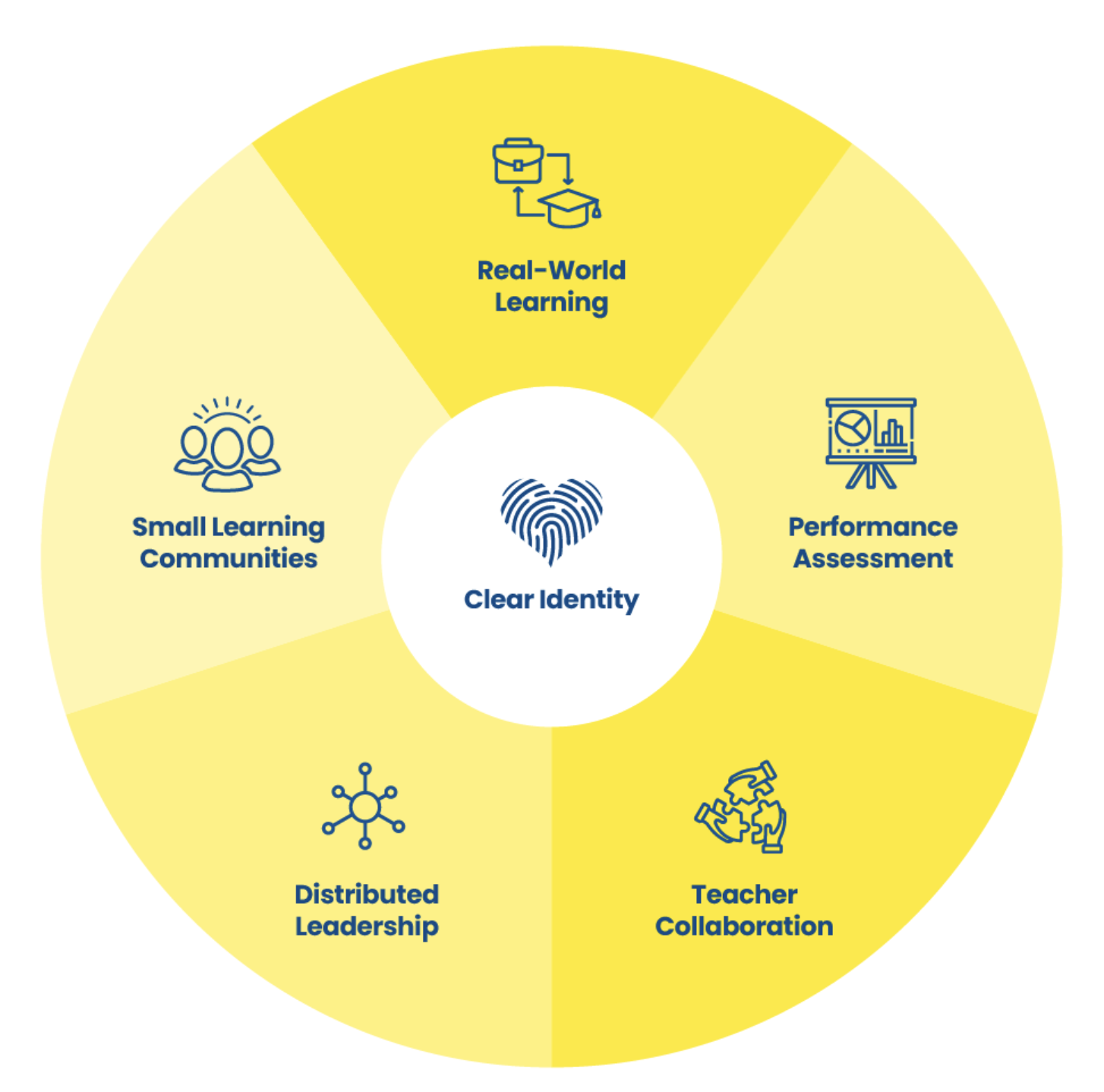
Impact
Why This Matters
For Participating Schools
This work creates protected space, support, and peer learning to redesign learning experiences around what matters most:
- Strong relationships
- Deeper learning
- Equitable outcomes
- Student engagement
- Sustainable structures
For Districts
Districts build internal capacity to support secondary redesign at scale by engaging cross-functional teams and connecting school-level learning to:
- District strategy
- Systems alignment
- Resource decisions
- Professional learning
- Budgeting priorities
For California
At the state level, the pilot is intentionally designed as both a learning and policy-informing effort. Alongside school and district redesign, CCEE is:
- Capturing baseline data
- Identifying common barriers
- Synthesizing themes across networks
- Informing practice-driven policy
Beyond California
California's investment in secondary redesign reflects a broader national shift toward learner-centered systems that prioritize:
- Belonging
- Agency
- Deeper learning
- Real-world readiness
How We Work Together
Community of Practice
The Community of Practice (CoP) model is at the heart of our network. It's designed to accelerate learning by bringing practitioners together to share, reflect, and grow.
Through regular virtual sessions and in-person convenings, teams have dedicated time to work together on the challenges and opportunities unique to secondary redesign.
Desired Outcomes
What You'll Have
- A sharper understanding of your assets and opportunities in school redesign
- Dedicated time with a network to reflect, celebrate successes, and brainstorm solutions
- Clarity around what strong school design requires and what your next steps are
What You'll Feel
- I am part of a community
- My questions and ideas are valued
- I am shaping the future of public education
How We Connect
Network Activities
How we come together to learn and grow.
Virtual CoP Calls
90-minute virtual sessions for district team debriefs, breakout discussions, and collaborative problem-solving.
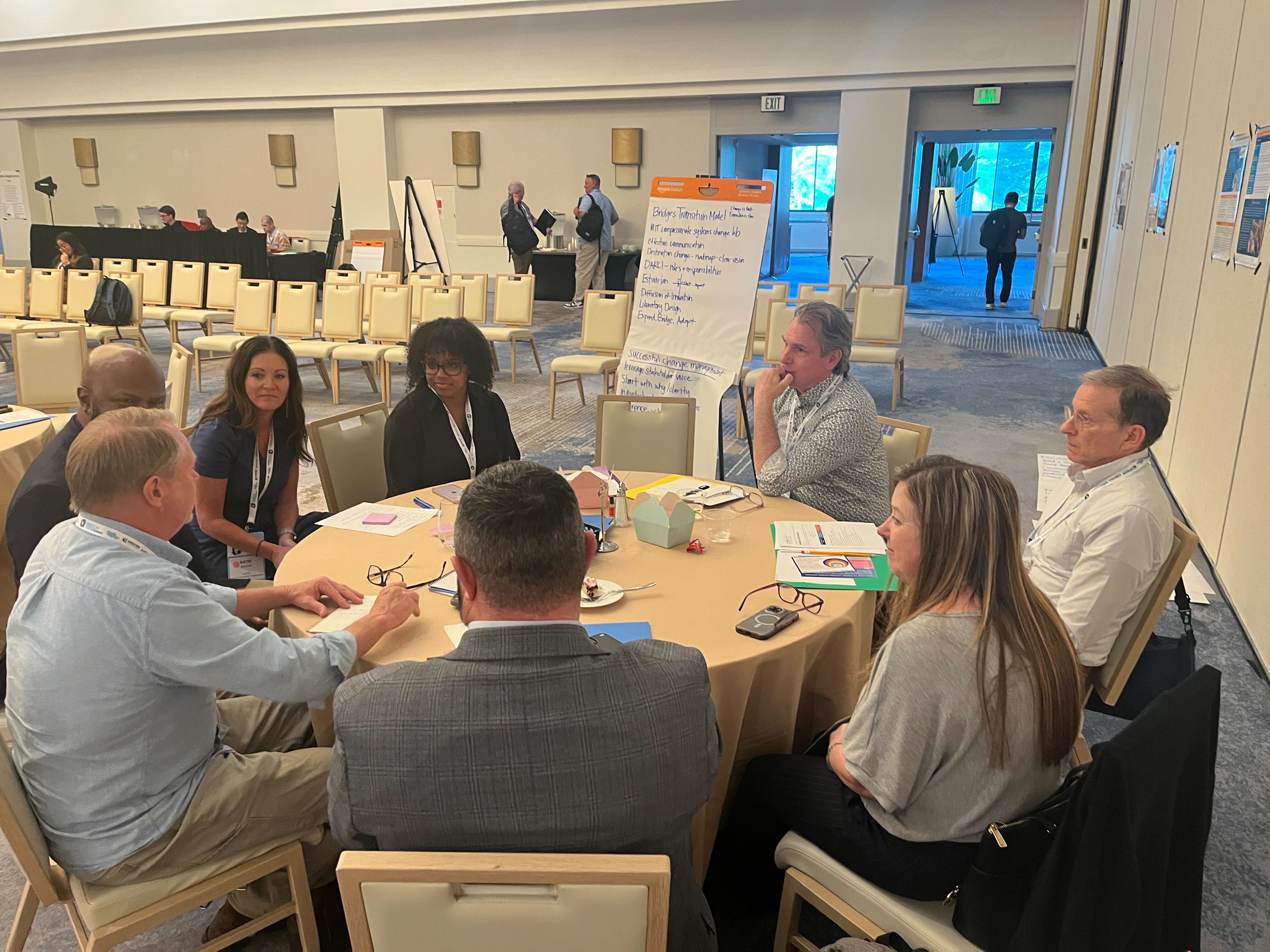
In-Person Convenings
Summer Institute and regional gatherings for deeper collaboration, school visits, and relationship building.
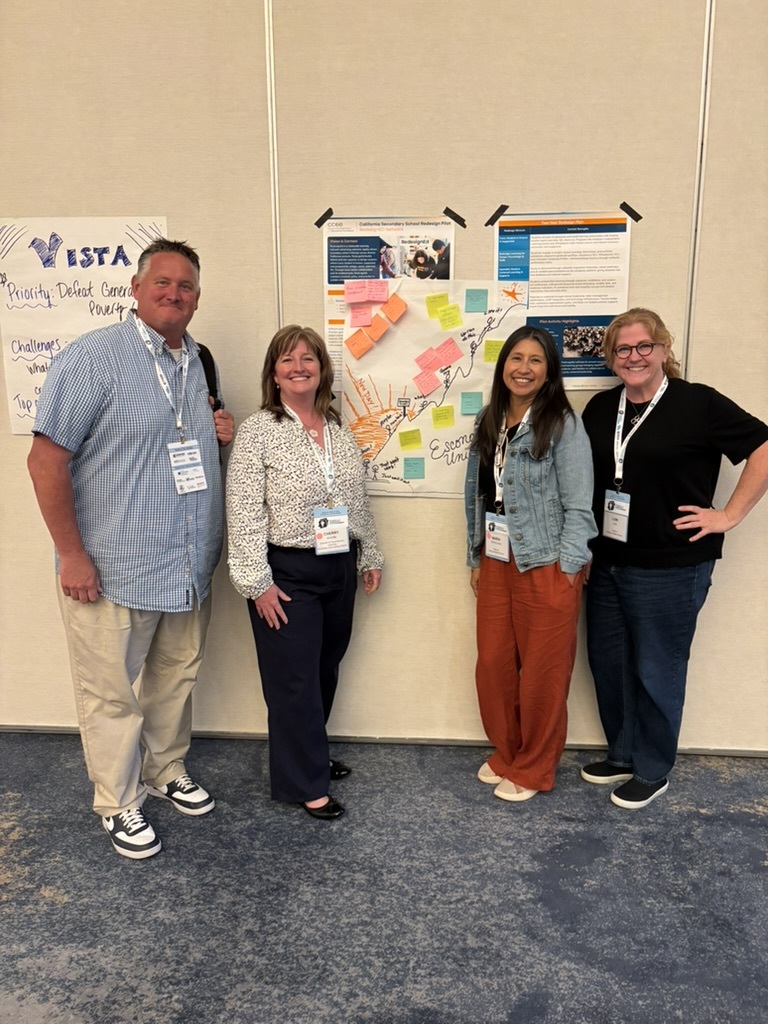
Poster Sessions
Teams share progress and learn from each other through interactive poster sessions and structured feedback.
Member Benefits
Benefits of Participation
Through this collaboration, participating districts receive substantial support for their redesign journey.
Peer Collaboration
Engagement with colleagues across the state who are leading secondary redesign efforts.
Research & Frameworks
Access to research, tools, and frameworks that can inform and support local initiatives.
School Visits & Learning Walks
Opportunities to see redesign strategies in action and bring insights back to your district.
Influence & Voice
A seat at the table in shaping models and strategies that may influence statewide policy.
Implementation Support
Onsite facilitation, coaching, and technical assistance from LCC partners.
Ready to Learn More?
Explore the districts and schools participating in our network, or dive into resources to support your own redesign journey.